
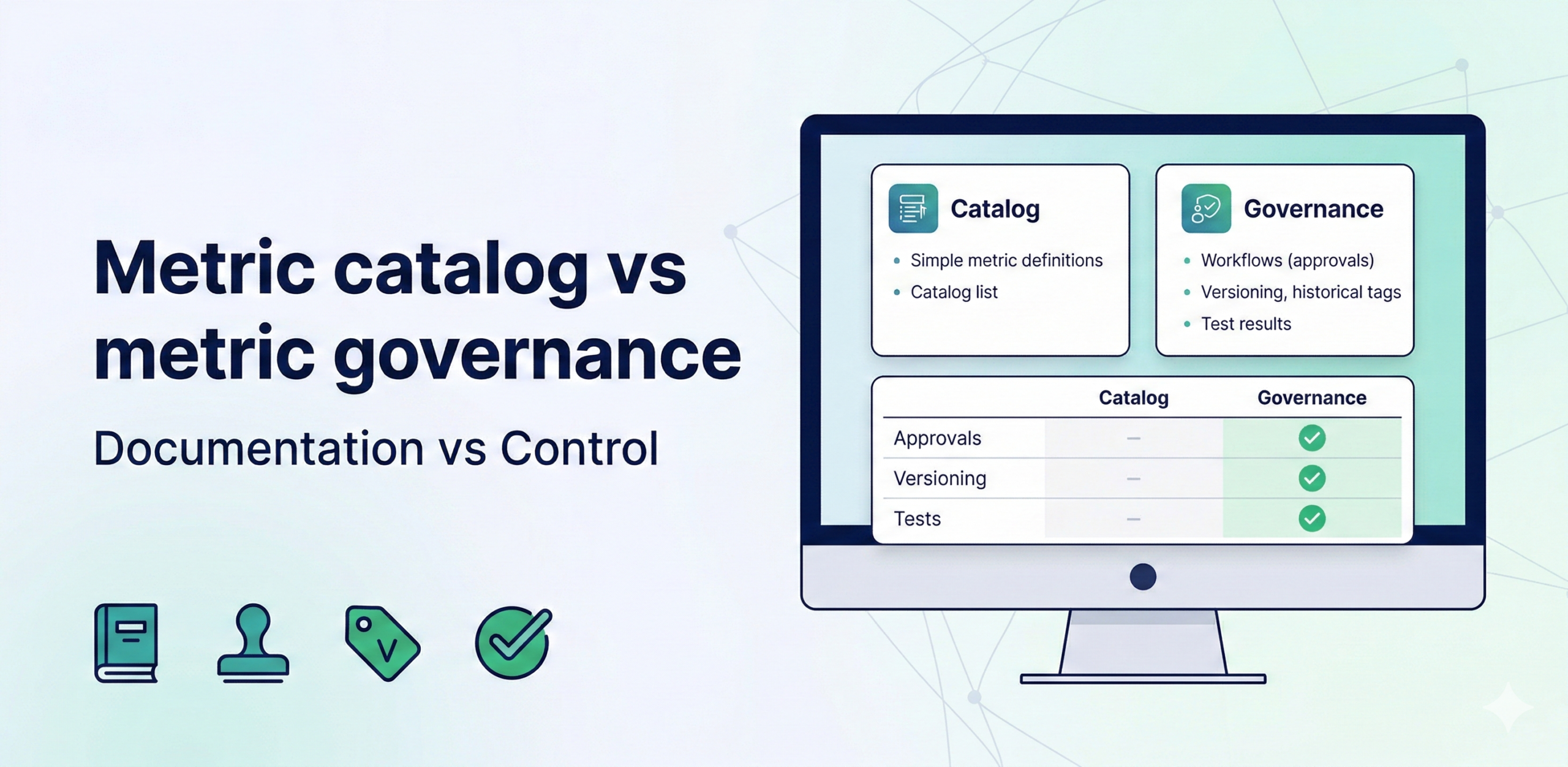
A metric catalog helps people discover and understand KPI definitions. Metric governance controls how KPIs are created, approved, versioned, tested, and changed so you don’t end up with multiple versions of the truth.
What each includes (use this table)
| Capability | Catalog | Governance |
| Definitions + meaning | ✅ | ✅ |
| Owners | ✅ | ✅ |
| Change approvals | ❌ | ✅ |
| Versioning + release notes | ❌ | ✅ |
| Regression tests | ❌ | ✅ |
| Enforcement (reuse) | ❌ | ✅ |
The “right-sized” approach (copy-paste)
- Build a small catalog for the gold KPIs (10–20)
- Implement governance alongside (approvals + versioning + tests)
- Enforce reuse through a semantic layer
- Expand only after adoption
MVP (3–5 weeks)
- Week 1: gold KPI list + owners
- Week 2: catalog entries (contracts)
- Week 3: governance workflow + release template
- Week 4–5: semantic layer enforcement + tests